
Quality teams in life sciences are under more pressure than ever. Regulations keep shifting. Product pipelines keep growing. And reviewers are stretched thin.
That’s why so many companies are moving from eQMS to Intelligent QMS. This shift isn’t just a buzzword. It’s a real response to real, everyday problems on the quality floor.
In this article, we’ll break down what’s broken in traditional quality management, what an intelligent QMS actually looks like, and where AI can genuinely help.
What Does eQMS Mean? A Quick Refresher
The eQMS meaning is simple: it’s an electronic quality management system. It replaces paper-based logs with digital forms, workflows, and approvals.
Electronic QMS systems were a huge leap forward in the early 2000s. They gave teams a central place for SOPs, deviations, CAPAs, and audits.
But most eQMS software was built for one job: digitizing paperwork. It wasn’t built to think, predict, or flag risk on its own. That gap is exactly where problems start.
The Real Problems Teams Face With Traditional eQMS
Ask any quality professional in pharma, biotech, or medical devices what frustrates them most. You’ll hear some versions of these five problems.
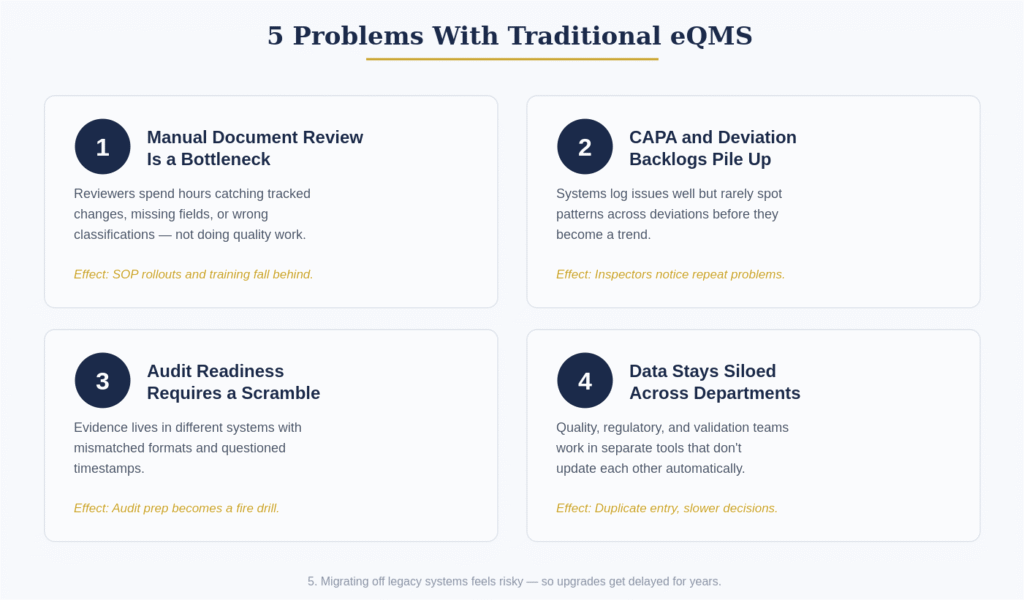
Figure 1 — The five most common pain points with traditional eQMS software.
1. Manual Document Review Is a Bottleneck
Controlled documents move slowly. A reviewer opens an SOP draft and finds a tracked change left in, a missing field, or the wrong classification.
None of that requires scientific judgment. But it still eats hours of a qualified reviewer’s day.
The effect: review cycles stretch out. SOP rollouts get delayed. Training falls behind schedule. Meanwhile, your most experienced people are doing proofreading instead of quality work.
2. CAPA and Deviation Backlogs Pile Up
Traditional qms software logs issues well. But it rarely helps teams spot patterns across deviations before they become a trend.
The effect: repeat issues surface again and again. Root cause investigations take longer. Inspectors notice when the same problem keeps reappearing in your CAPA history.
3. Audit Readiness Requires a Scramble
When an inspection is announced, teams often spend days pulling evidence together manually. Logs live in different systems. Formats don’t match. Timestamps get questioned.
The effect: audit prep becomes a fire drill instead of a routine task. Stress goes up. So does the risk of missing something.
4. Data Stays Siloed Across Departments
Quality, regulatory, and validation teams often work in separate tools. A change in one system doesn’t automatically update another.
The effect: duplicate data entry, version mismatches, and slower decision-making at every handoff.
5. Migrating Off Legacy Systems Feels Risky
Many organizations are still running outdated on-premise QMS platforms. Moving to a modern system means touching years of validated records.
The effect: teams delay upgrades for years, even when the old system is clearly holding them back, simply because migration feels too risky.
Does RxCloud Have Solutions for These Problems?
For document review bottlenecks specifically, yes. RxCloud’s RxQCAgent is an AI-powered document review quality gate. It screens controlled documents the moment they enter your workflow, catching formatting, metadata, and GxP-readiness gaps before a human reviewer ever sees them.
Importantly, it stays advisory. It never approves or rejects a document on its own, a qualified reviewer always makes the final call. Every finding is reason-coded and logged for an audit-ready trail.
For the broader challenges — CAPA management, migration, and legacy system upgrades, RxCloud’s Quality Management System consulting services cover implementation, migration, upgrades, and validation across platforms like TrackWise and Veeva Vault.
Not every organization’s problem looks the same, though. If your biggest pain point is somewhere else, it’s worth an honest conversation before assuming any one tool is the fix.
What Is Intelligent QMS (iQMS)?
So, what is iQMS exactly? An intelligent QMS builds on everything an eQMS already does, then adds a layer of AI on top.
Instead of just storing and routing data, an intelligent QMS interprets it. It can:
- Flag review-readiness issues automatically before a document reaches a human
- Spot recurring patterns across deviations and CAPAs
- Predict where risk is likely to surface next
- Generate audit-ready evidence trails without manual compilation
In short, an eQMS records what happened. An intelligent QMS helps you understand it and sometimes prevent it.
From eQMS to Intelligent QMS: The Key Differences
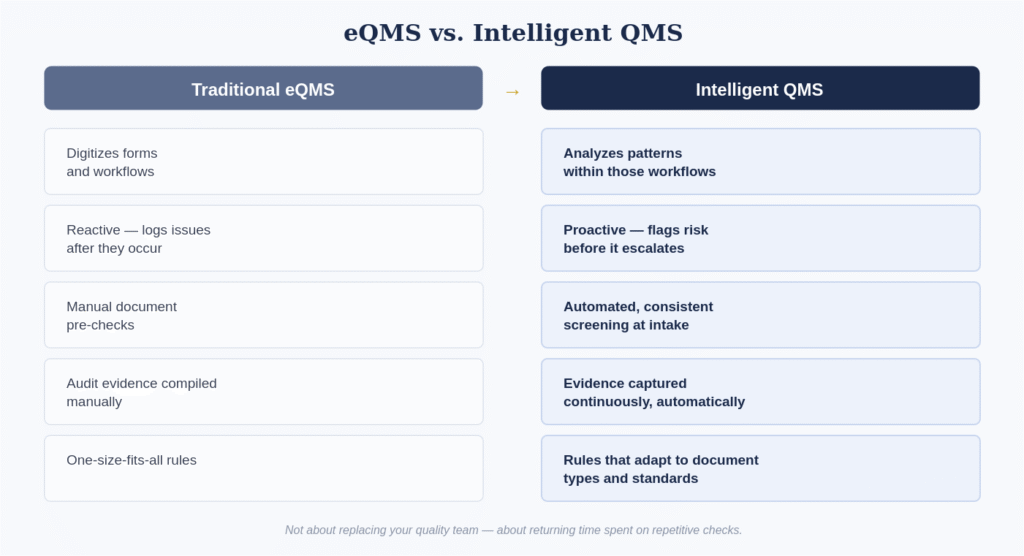
Figure 2 — Traditional eQMS vs. Intelligent QMS, side by side.
This is the real distinction behind QMS with ai. It’s not about replacing your quality team. It’s about giving them back the time they currently spend on repetitive, mechanical checks.
How AI Is Solving Common QMS Software Problems
Faster, More Consistent Document Intake
AI-driven screening checks every document against the same standard, every time. That removes the person-to-person variation that creeps into manual pre-checks.
Fewer Avoidable Rejections
When issues are caught at intake instead of deep in formal review, documents bounce back to authors immediately with clear, specific feedback. Fixes happen in minutes, not days.
Stronger Audit Trails
Every AI-assisted screening produces a timestamped, reason-coded record. That’s evidence you don’t have to reconstruct later under pressure.
Human Judgment Stays in Control
A well-designed intelligent QMS never removes the human reviewer. It filters out the mechanical noise so people can focus on scientific and quality judgment where their expertise actually matters.
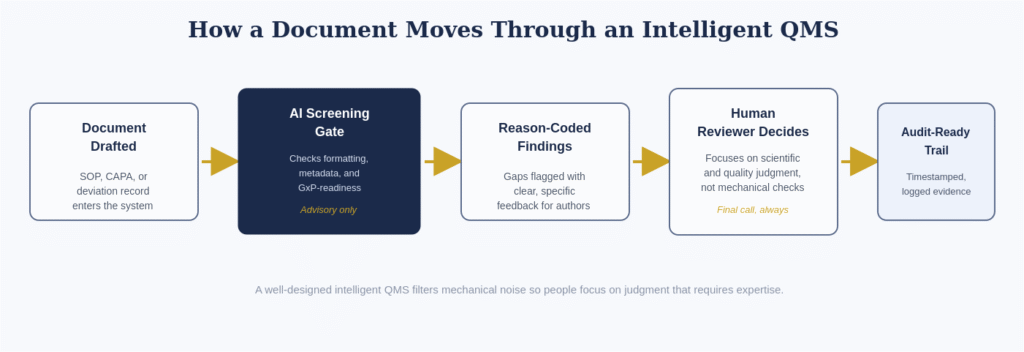
Figure 3 — How a document flows through an intelligent QMS, from intake to audit trail.
Choosing the Best QMS Software Solutions for Your Organization
There’s no single “best QMS software” for every company. The right choice depends on your regulatory scope, your existing tech stack, and your team’s capacity.
When evaluating QMS software solutions, consider:
- Integration ability. Can it connect to your existing DMS, ERP, or validation tools without a rip-and-replace project? Good QMS integration should work through adapters, not disruption.
- Validation support. Does the vendor understand CSV/CSA requirements, or will your team carry that burden alone?
- Scalability. Will it support you as you add product lines, sites, or regions?
- Starting point. If you’re building a QMS from scratch, prioritize platforms with strong implementation support over ones that assume you already have mature processes in place.
Why Regulatory Change Makes Intelligent QMS More Urgent
Quality standards aren’t static. The FDA’s own Quality Management System Regulation (QMSR), which took effect in February 2026, folded ISO 13485:2016 directly into device manufacturing requirements. You can read the official details on the FDA’s QMSR page.
That kind of regulatory alignment raises the bar for documentation consistency and audit readiness. A system that only digitizes paperwork struggles to keep pace. A system that actively screens for compliance gaps has a real advantage.
Frequently Asked Questions
What is the difference between eQMS and intelligent QMS?
An eQMS digitizes quality processes like SOPs, CAPAs, and audits. An intelligent QMS adds AI on top, using that same data to flag risks, screen documents automatically, and build audit trails without manual effort.
What is IQMS in quality management?
IQMS, or intelligent QMS, refers to a quality management system enhanced with AI and automation. It goes beyond storing records to actively analyzing them for patterns, gaps, and compliance risks.
Is AI safe to use in a GxP-regulated QMS?
Yes, when it’s designed correctly. AI tools built for regulated environments should stay advisory, keep a human reviewer in control of final decisions, and produce a reason-coded, timestamped audit trail for every action.
Can we build a QMS from scratch, or should we upgrade an existing one?
It depends on your current maturity. Organizations without an established system often benefit from starting with strong implementation support. Those with a legacy eQMS usually gain more from a structured migration and upgrade path.
Do electronic QMS systems become obsolete once AI tools exist?
Not necessarily. Most intelligent QMS capabilities are layered on top of your existing electronic QMS systems rather than replacing them outright.
Ready to Move From eQMS to Intelligent QMS?
Legacy systems got you this far. But manual document review, CAPA backlogs, and audit-day scrambles don’t have to be permanent fixtures of your quality operation.
Talk to RxCloud’s quality engineering team about where AI can realistically help and where it can’t.