12 Essential Risk-Based Auditing Approaches for Internal Audit Teams in 2026
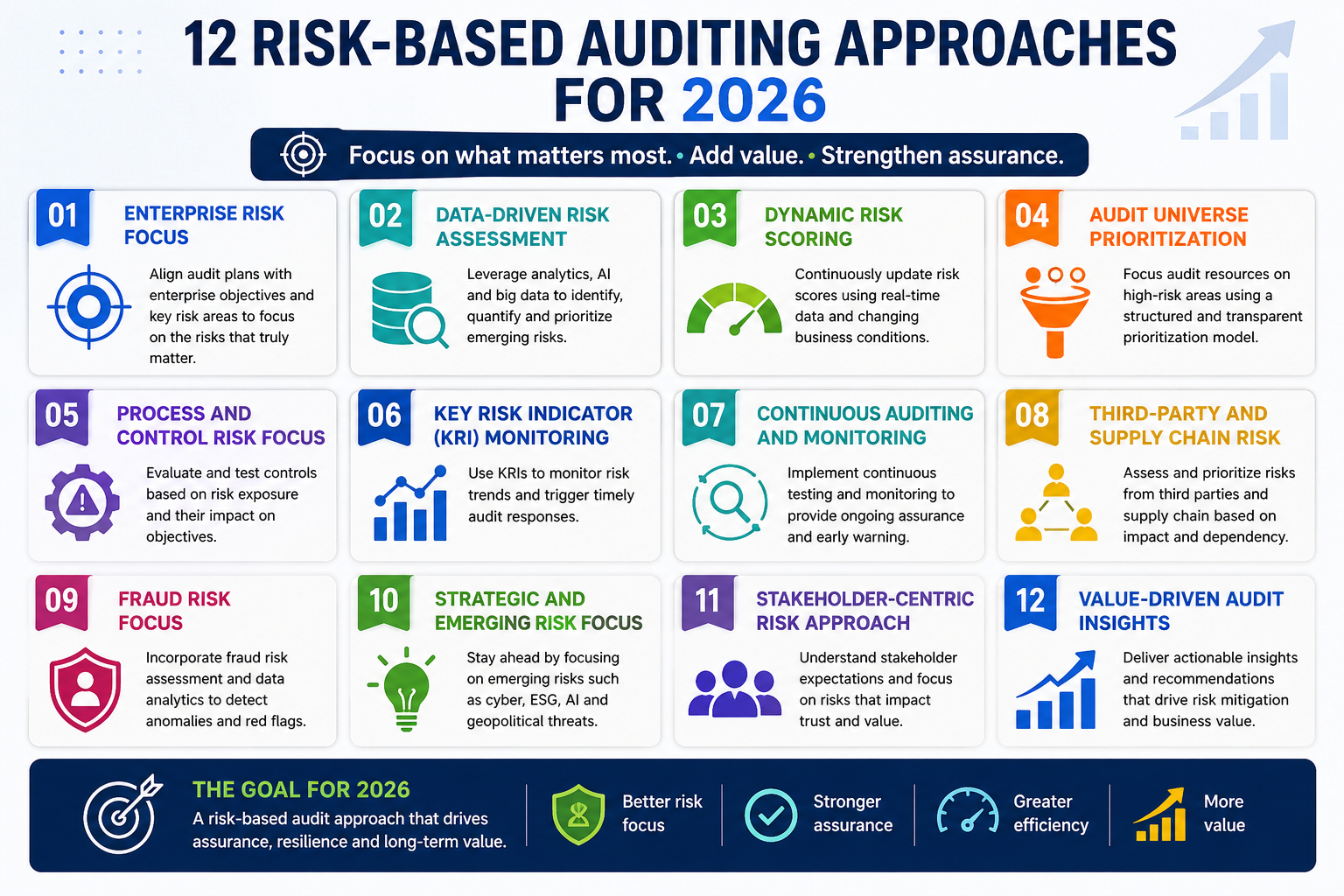
In 2026, internal audit teams face complex, fast-changing risks. A risk-based auditing approach ensures audits focus on an organization’s highest threats and objectives. This modern method aligns audit planning with enterprise risk management and strategic goals. It moves beyond box-checking to prioritize areas where failures could derail the business. By leveraging tools like AI and data analytics, auditors can continuously monitor risks and test entire data sets (rather than samples) to spot anomalies. The result is more efficient audits, better resource use, and reports that truly inform leadership about critical risks and controls.
Key Risk-Based Auditing Approaches
1. Rapid Assurance Audits
Conduct short, focused audits on low-risk or stable areas to free up resources. A “rapid assurance” review (1–2 days) uses sampling of routine tasks to confirm controls are functioning, without exhaustive testing. This quick check lets auditors cover more ground and schedule thorough audits only where problems emerge.
2. Project Assurance
Embed internal auditors into major projects (e.g., new system implementations) to provide real-time risk feedback. By auditing project governance, timelines, and budgets as projects proceed, teams catch issues early and advise managers on controls. This proactive approach helps ensure project risks are managed before they become failures.
3. Facilitated Self-Assessment (FSA)
Use workshops or surveys where process owners identify and rank risks in their areas. Facilitated self-assessment lets the business help audit by reflecting on its own controls. Auditors guide these sessions, standardize the results, and focus testing on areas owners flag as high risk. This builds risk awareness and often uncovers issues that standard checklists miss.
4. Maturity Model Audits
Frame audit findings around process maturity levels (for example, using models like CMMI or COBIT maturity scales). Rather than just noting “compliant/non-compliant,” auditors evaluate how well processes are defined, monitored, and optimized over time. This highlights strengths and gaps in risk management capability. Maturity scoring helps management see the “big picture” of progress and drives continuous improvement.
5. Data Analytics & AI-Driven Auditing
Leverage data mining and artificial intelligence to scan full populations of transactions or logs. Tools can detect outliers, trends and anomalies that indicate risk (for example, unusual journal entries or access patterns). AI-driven analytics enable risk-based audit trails, reviewing only critical data elements instead of 100% of records. This approach increases coverage and accuracy while improving audit efficiency.
Modern organizations are increasingly adopting cloud-based audit and risk management solutions to improve visibility, automation, and compliance tracking. Platforms like RX Cloud help internal audit teams streamline risk assessments, monitor controls in real time, and enhance audit efficiency through centralized workflows and advanced analytics. By integrating intelligent audit technologies, businesses can strengthen governance while adapting faster to evolving risks in 2026 and beyond.
6. Continuous & Agile Auditing
Move from periodic, annual audits to an ongoing risk monitoring process. Use continuous auditing techniques supported by automation and predictive analytics to update risk assessments in real time. This agile approach keeps pace with fast-changing business environments and ensures audits remain relevant.
7. Framework-Based Auditing
Align audits with established risk management standards. Integrate frameworks like ISO 31000 or COSO ERM to structure risk identification and treatment. This ensures no major risk category is overlooked and helps organizations meet regulatory expectations.
8. IT & Cyber Risk Auditing
Prioritize high-impact IT risks when planning audits. Focus on cybersecurity, data privacy, cloud systems, and business continuity. This approach ensures that audit resources are directed toward the most critical digital risks affecting the organization.
9. Third-Party & Co-Sourced Audits
Engage external experts or collaborate with specialized teams for complex risk areas. Third-party audits provide fresh perspectives and technical expertise. This approach strengthens audit coverage, especially in high-risk or niche domains.
10. Strategic Alignment
Tie audit planning directly to the organization’s strategic objectives. Focus on areas where risk exposure could impact business goals the most. This ensures that audit efforts deliver maximum value to leadership.
11. Key Risk Indicator (KRI) Monitoring
Use measurable risk indicators such as error rates, compliance issues, or financial ratios. Monitoring KRIs helps auditors identify emerging risks early and adjust audit plans accordingly.
12. Regulatory & Compliance Integration
Combine risk-based auditing with compliance requirements. Ensure that critical regulations and standards are covered within the audit process. This approach balances risk prioritization with mandatory compliance needs.
Each approach above helps internal audit become a strategic partner – focusing on what truly matters. In practice, audit teams often blend several of these methods. For example, an audit on a new IT system might use a project-assurance embedded approach, data analytics for testing, and alignment to ISO/COBIT risk controls.
Common Challenges in Risk Based Auditing
- Lack of Proper Risk Data
- Incomplete or outdated data
- Poor data quality
Solution:
- Implement data governance
- Use automated tools
2. Resistance from Teams
- Employees may resist audits
- Fear of accountability
Solution:
- Build a risk-aware culture
- Communicate benefits clearly
3. Limited Resources
- Small audit teams
- Budget constraints
Solution:
- Focus on high-risk areas
- Use automation and AI
4. Rapidly Changing Risk Environment
- New technologies
- Cyber threats
- Market changes
Solution:
- Adopt continuous auditing
- Stay updated with trends
Best Practices for Effective Risk Based Auditing
1. Develop a Strong Risk Framework
- Use frameworks like:
- ISO 31000
- COSO ERM
Benefits:
- Structured approach
- Better risk coverage
2. Integrate Audit with Risk Management
- Align with ERM (Enterprise Risk Management)
Key Actions:
- Share risk insights
- Collaborate with risk teams
3. Focus on Continuous Improvement
- Regularly update audit processes
- Learn from past audits
Methods:
- Feedback loops
- Performance reviews
4. Leverage Technology
- Use:
- AI tools
- Automation
- Audit software
Benefits:
- Faster execution
- Better accuracy
- Reduced manual effort
5. Train Audit Teams Regularly
- Conduct:
- Risk based auditing training courses
- Workshops
- Certifications
Outcome:
- Skilled auditors
- Better audit quality
Benefits of Risk Based Auditing
1. Improved Audit Efficiency
- Focus on critical areas
- Reduce unnecessary audits
2. Better Risk Management
- Early risk identification
- Stronger controls
3. Enhanced Decision Making
- Data-driven insights
- Strategic alignment
4. Cost Optimization
- Efficient resource allocation
- Reduced audit costs
5. Stronger Compliance
- Meets regulatory requirements
- Reduces penalties
Future Trends in Risk Based Auditing (2026 & Beyond)
1. AI and Automation in Auditing
- Automated risk detection
- Predictive analytics
2. Real-Time Auditing
- Continuous monitoring
- Instant alerts
3. Increased Focus on Cyber Risk
- Data protection
- Cloud security audits
4. ESG and Sustainability Audits
- Environmental risks
- Governance practices
5. Integration with Business Strategy
- Audit as a strategic function
- Direct contribution to growth
Frequently Asked Questions
Q: What is risk-based auditing and why is it important?
A: A risk-based audit approach starts with identifying and assessing the organization’s key risks, then plans audits around those areas. Instead of auditing all processes equally, auditors concentrate on areas where failures would most threaten objectives. This leads to more effective use of audit time and provides leadership with assurance on the most critical issues. Standards like ISO 31000 emphasize this systematic risk approach, which helps turn audit from a compliance exercise into a strategic tool.
Q: How does technology improve risk-based auditing?
A: Modern tools (data analytics, AI, continuous monitoring software) let auditors test full data sets and spot anomalies that indicate risk. For example, AI-driven models can continuously score transactions or access logs, flagging unusual patterns. This means auditors can update risk assessments in real time and audit more efficiently. Automation also frees auditors from routine checks – they spend time analyzing emerging risks instead.
Q: Can any industry use these approaches?
A: Yes – risk-based auditing is applicable across sectors. Whether manufacturing, finance, healthcare or tech, every organization has strategic and operational risks. The details differ (e.g. regulatory risks in pharma vs. financial risks in banking), but the principles are universal. In fact, sectors like pharmaceuticals already mandate risk management in quality (ICH Q9, ISO standards). Adopting a risk-based audit framework (aligned to ISO 31000, COSO or industry-specific standards) lets any audit team focus on the right issues for its business and environment.
Q: How should an internal audit team start implementing risk-based auditing?
A: Begin with a thorough risk assessment: understand business objectives and identify what could threaten them. Involve management and use workshops or data to rank those risks. Then build the audit plan around top risks, rather than a fixed annual schedule. Gradually introduce techniques like targeted sampling or data analytics for high-risk areas. Training and stakeholder collaboration are key – involve process owners early, and align with the risk management framework (such as ISO/COSO). Over time, continuously update your risk register and let it drive audit choices.
Recent Post
- Computer Software Assurance: What Changed in the 2026 CSA Guidance
- QMSR Compliance in 2026: What FDA Inspectors Are Checking First
- EU GMP Annex 22 Explained: What Pharma Quality Teams Must Do Before AI Rules Become Final in 2026
- Validating Agentic AI in GxP: How to Qualify AI Agents That Act, Not Just Answer
- From eQMS to Intelligent QMS, How AI and Automation Are Reshaping Quality Management in 2026